Yomida Forest
The Deer KingYomida Forest is a woodland reached through black stone country, where signs of ancient volcanic flows persist beneath the trees. Van enters it with Yuna and Assenomi on their way to meet the Echo Master; the route makes the forest a threshold between familiar travel and an encounter in a concealed place. It is also part of the environment in which Van’s practical knowledge of animals, plants, and seasonal movement has meaning.
Setting and Terrain
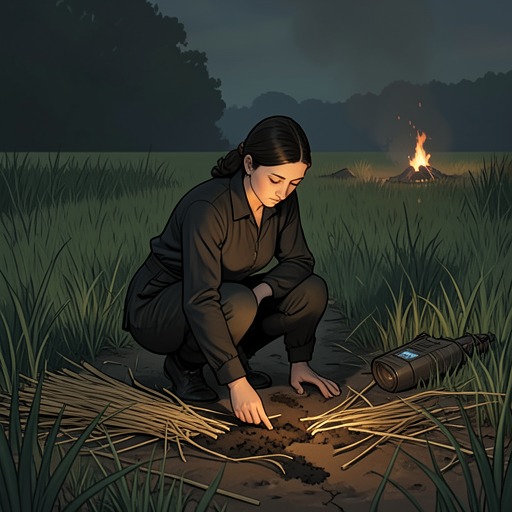
The approach passes through a field of black stones before entering a gloomy forest. Van observes that stones supporting the trees’ roots share the color of those in the open field, linking the wooded ground to the region’s fire-mountain landscape. The wind shifts the stench along the route, but Van finds that it bothers him less once he adjusts to it.
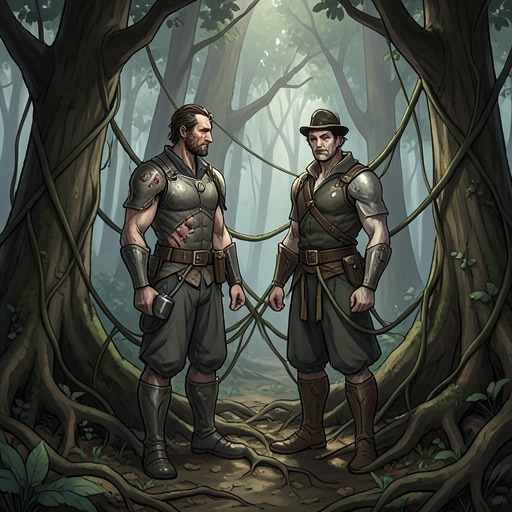
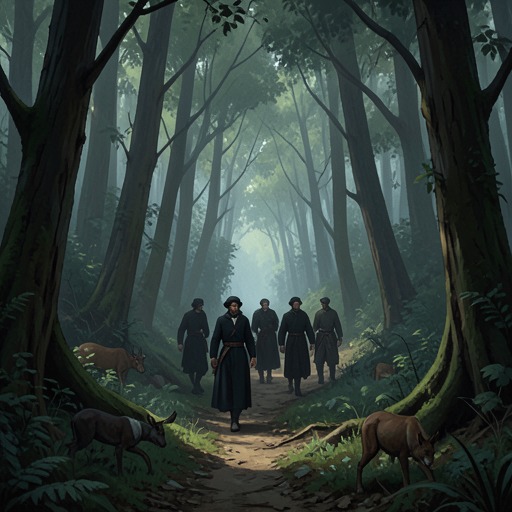
The forest is warmer than the surrounding woods, and its trees carry moss while ivy hangs from their branches. Van suspects the soil is thin. Beyond the vines, the travelers see a towering cliff covered in green and white moss; a dark opening in its face marks their destination. The progression from exposed stone, into warmer woodland, and finally to the cliffside opening gives the journey a clear movement from open terrain toward concealment.
The Route to the Echo Master
Assenomi, the Echo Master’s messenger, summons Van and his daughter, Yuna, to meet her master in the forest. She asks them to come during a break between blizzards and guides them on the journey. Yuna takes the black stones for recognizable figures, calling out shapes that resemble a reindeer, an old woman, and a mouse. Her playful reading of the landscape contrasts with Van’s attention to geology and the route ahead.
At the cliff, Assenomi announces that they have arrived. The opening appears to lead deep into the earth, and the meeting place is framed not as an ordinary settlement but as a hidden destination reached through distinctive terrain. The forest’s role in the episode is therefore both geographical and narrative: it carries the travelers from an invitation into the Echo Master’s concealed domain.
Animals, Plants, and Seasonal Knowledge
The forest setting belongs to a wider world in which Van’s familiarity with animal habits shapes daily life. Pyuika form lasting attachments to people they bond with, and a doe separated from her home herd may become lonely. In fall, mating season can draw one away: Van infers that Tsupi is searching for a bull elk after detecting its scent. This knowledge informs how he interprets her behavior and tracks her, rather than treating her disappearance as simple disobedience.
Plant knowledge also governs how people manage pyuika. Mohoki, a lichen growing on old trees, repels them; braided into ropes and placed around a fence, it can keep them within a corral. Yet confinement is not a suitable way to raise them: they do better roaming freely by day, and excessive restraint can make them decline. Their seasonal routes can also be influenced by placing mohoki along familiar paths. In winter, herders gather ashimi, a different lichen that pyuika eat heavily during mating season and seem to crave when carrying young. These details place the forest within an ecological system of animal movement, plant use, and care.
Van’s knowledge is grounded in long observation rather than simple control. In his homeland, children accompany adults in the forest and learn pyuika behavior as they watch herds range freely. That practical knowledge informs how the forest and its living resources are understood throughout the story: a landscape to read and move through, not merely a space to enclose or command.